- Most Hampton Roads lawns are tall fescue, which grows best in cool weather.
- Keep thick, wet layers of leaves off the grass.
- Mow a little high, feed fescue in fall, and stay off frosty grass.
Winter here is mild compared to most of Virginia, and that changes what a lawn needs. Fescue keeps growing slowly through cool weather, so the care you give it now pays off when everything greens up in spring.
Know your grassMost lawns here are tall fescue
Fescue stays green through much of the winter. Warm-season grasses like Bermuda and zoysia, which some yards near the water have, go tan and rest until spring.
If your lawn turns straw colored in December, it is probably resting, not dying.
Fall cleanupKeep leaves off the grass
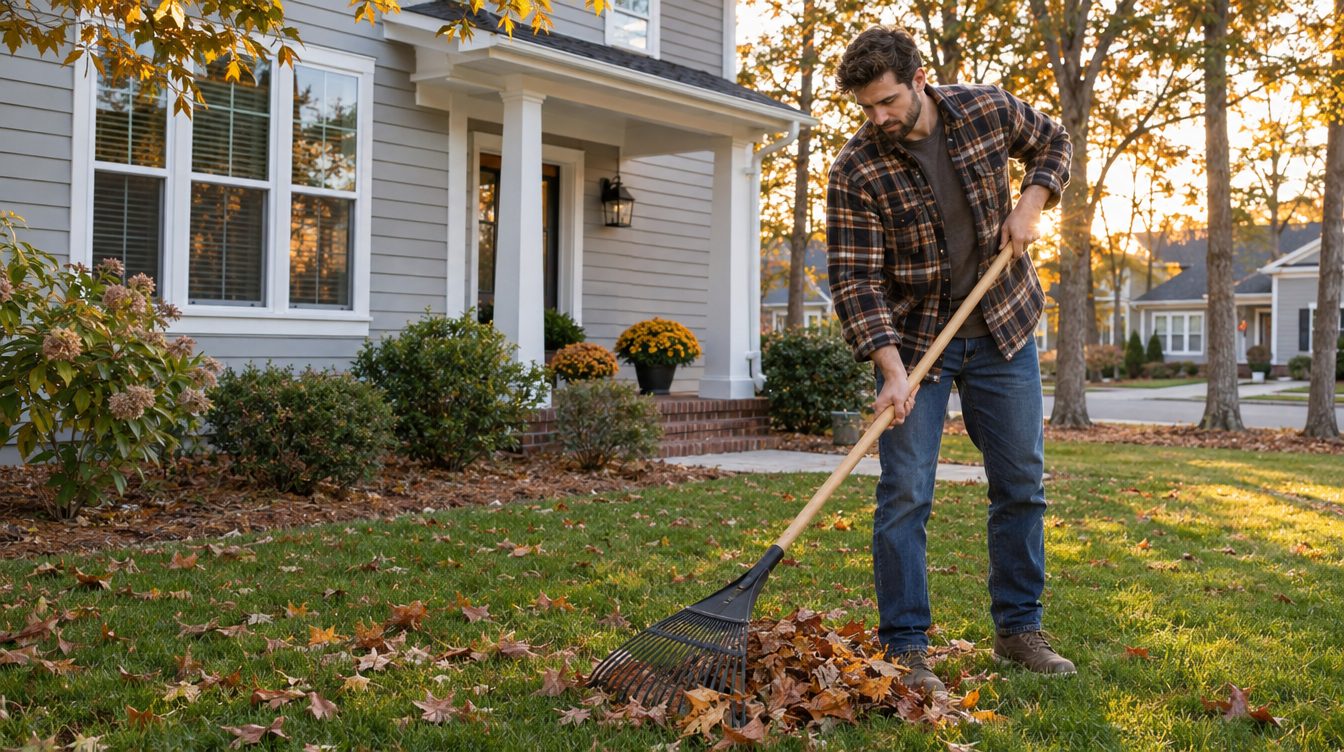
A thick, wet layer of leaves blocks light and holds moisture against the grass, which is how bare patches start. Rake them, blow them into your beds, or run over a light layer with the mower so the pieces fall between the blades.
Shredded leaves feed your lawn. A wet blanket of them smothers it.
MowingMow high, then let it rest
Keep fescue on the taller side as it slows down. Taller grass shades out weeds and holds up better on cold nights. Once it stops growing, the mower can rest too.
FeedingFeed fescue, let warm grass sleep
Fescue does most of its feeding in fall, which is why many lawn programs here fertilize it in early and late fall. Bermuda and zoysia are different: feeding them while they rest mostly feeds the weeds.
Cold morningsStay off frosty grass
Frozen grass blades break when they are stepped on, and the footprints can show up as brown tracks later. On frosty mornings, let the sun do its work before anyone crosses the lawn.
A little attention through the cool months, and your lawn starts spring ahead.