- Clean your gutters after most of the leaves have fallen, often late November or early December in Hampton Roads.
- Make sure downspouts carry water at least five feet from your foundation, especially if your home has a crawl space.
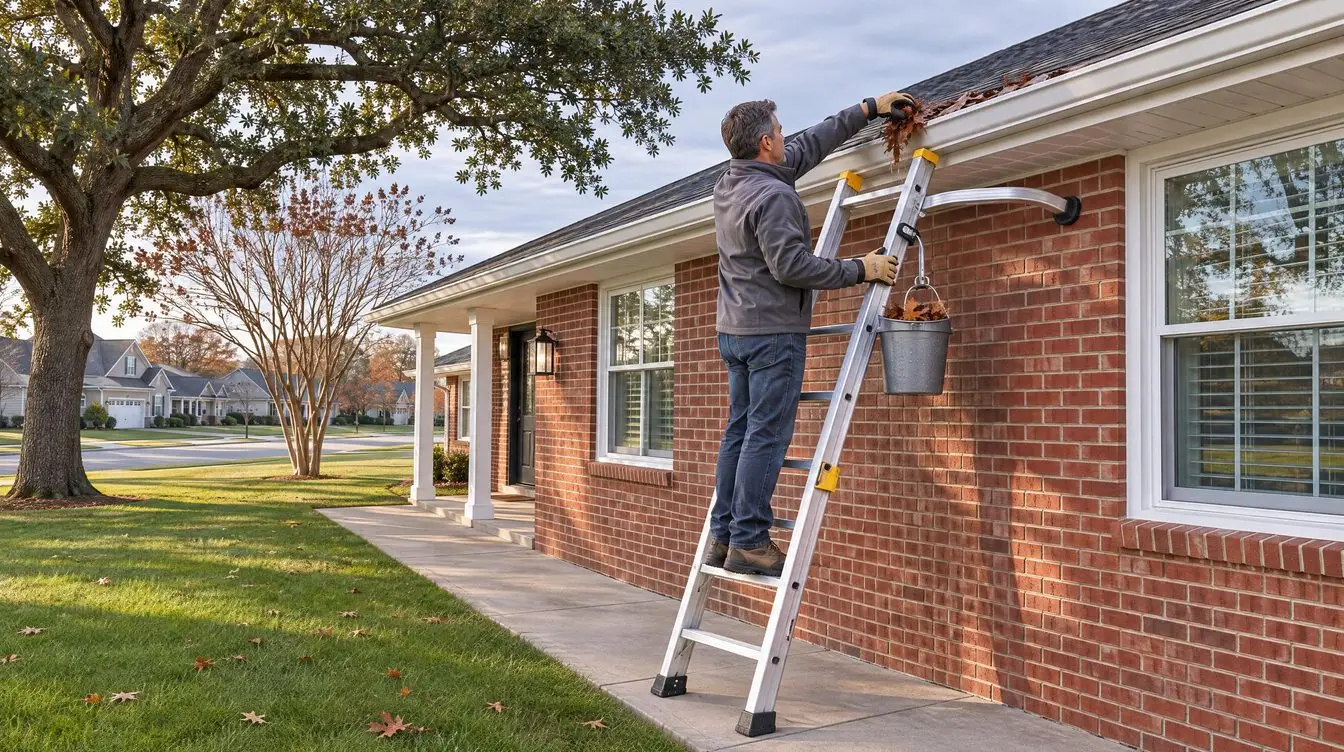
- Use a ladder on firm, level ground with three points of contact, or hire a local pro if the climb feels too high.
Leaves do not fall all at once in Hampton Roads. Oaks, maples and sweetgums keep dropping into December. By the time the last leaf lands, our wet winter weather has already arrived, and a nor’easter can dump a lot of rain in a short time. A clogged gutter sends that water over the edge and down your siding, and toward your foundation.
TimingWhen to clean your gutters here
Wait until most of the leaves are down, then clear the gutters and downspouts before the heavy winter rains settle in. For many Hampton Roads yards, that means late November or early December. If you have oaks or pines close to the roof, look again after the last leaves fall.
Twice a year is a common rhythm, once in fall and once in spring. Add a look after any big storm, since wind can pack a gutter full in an afternoon. If you are also deciding what to do with the leaves on the ground, our guide to leaves on the lawn covers raking, mulching and leaving them.
Before you climbSet up the ladder first
Most gutter trouble comes from the ladder, not the leaves. The Occupational Safety and Health Administration (OSHA) advises keeping three points of contact on a ladder at all times, which means two hands and one foot or two feet and one hand. OSHA also says to stay centered between the rails and never stand on the top three rungs of an extension ladder.
- Set the base on firm, level ground, not on soft lawn or a mulch bed.
- Angle the ladder so the base sits about one foot out for every four feet of height, which is OSHA’s rule of thumb.
- Wear gloves, since gutter edges can cut.
- Pick a dry day.
- Move the ladder instead of reaching. If your belt buckle leaves the rails, climb down and shift it.
Clear and checkClear the gutters, then watch how water leaves
Scoop out the debris by hand or with a small plastic scoop and drop it in a bucket or bag. Then rinse the gutter with a garden hose, working toward the downspout, and watch the water. It should run freely and come out the bottom of the downspout. If it stands in the gutter or backs up, you have a clog or a sag.
While you are up there, look for sagging sections, loose fasteners, open seams and peeling paint on the trim behind the gutter.
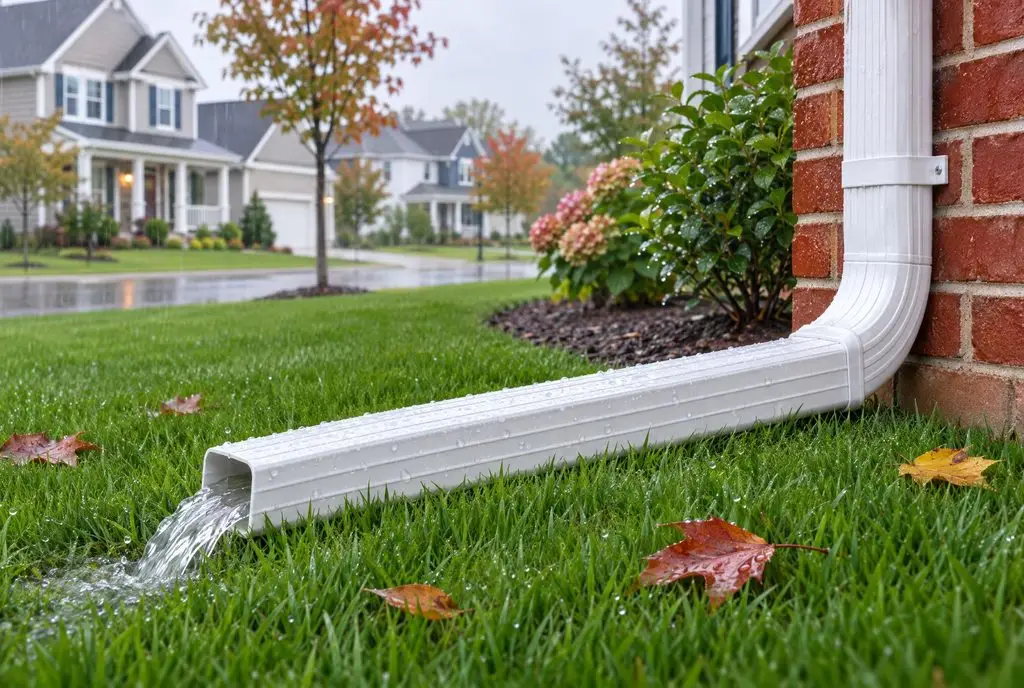
Then follow the water to the ground. A downspout that empties right at the foundation defeats the purpose. Building science guidance from the U.S. Department of Energy suggests ending downspouts at least five feet from the foundation. You have two simple ways to get there.
Crawl spacesWhy this matters more over a crawl space
Many Hampton Roads homes sit on crawl spaces, and our humid air already keeps them damp. Water that lands beside the foundation soaks the soil, and that moisture can work its way under the floor. Gutters that drain well away from the house help keep that space drier. Add gutters to your maintenance schedule so the home item comes around every fall. Our guide to the first freeze is a good companion for the same weekend.
Roof water should end up well away from your walls, not beside them.
Your callRather have a pro handle it?
Some gutters are too high, some roofs too steep and some yards too sloped for a ladder. That is a good reason to hand it off. On HRHS you can search local pros who serve your area, check qualifications and reviews, check availability, then request a bid or reach out, all in one place before you share any personal information. Start with Roofing and Gutter Services pros across Hampton Roads.
Common questions
How often should gutters be cleaned?
Twice a year, in fall and spring, is a common starting point. Homes under oaks, sweetgums or pines may need a look more often, and a check after a big storm helps. If water spills over the edge during a normal rain, clean them sooner.
When is the best time to clean gutters in Hampton Roads?
Wait until most of the leaves have fallen, which is often late November or early December here. Clean them before the heavy winter rains and nor’easters settle in. If a few late leaves land afterward, a second look in winter is fine.
Are gutter guards worth it?
They can reduce how much debris gets in, which helps under heavy leaf drop. They do not remove the need to check, since pine needles and grit can collect on some styles. A local pro who knows your roof and your trees can tell you whether a guard suits your home.
Should I clean my gutters myself or hire a pro?
If your gutters are within reach of a ladder on level ground and you are comfortable up there, it is a reasonable do-it-yourself home item. If the roof is steep, the gutters are above one story or the ground slopes, hiring a pro is the safer choice. You can compare local pros on HRHS before you decide.
How far should a downspout drain from my house?
Building science guidance from the U.S. Department of Energy suggests ending downspouts at least five feet from the foundation. Use an extension or a splash block, and make sure the ground slopes away so water does not pool next to the house.
Can clogged gutters cause moisture in a crawl space?
They can contribute. When gutters overflow, water lands beside the foundation and soaks the soil, which can add moisture under the house. A wet crawl space can have other causes too, so ask a pro to take a look if you see standing water.