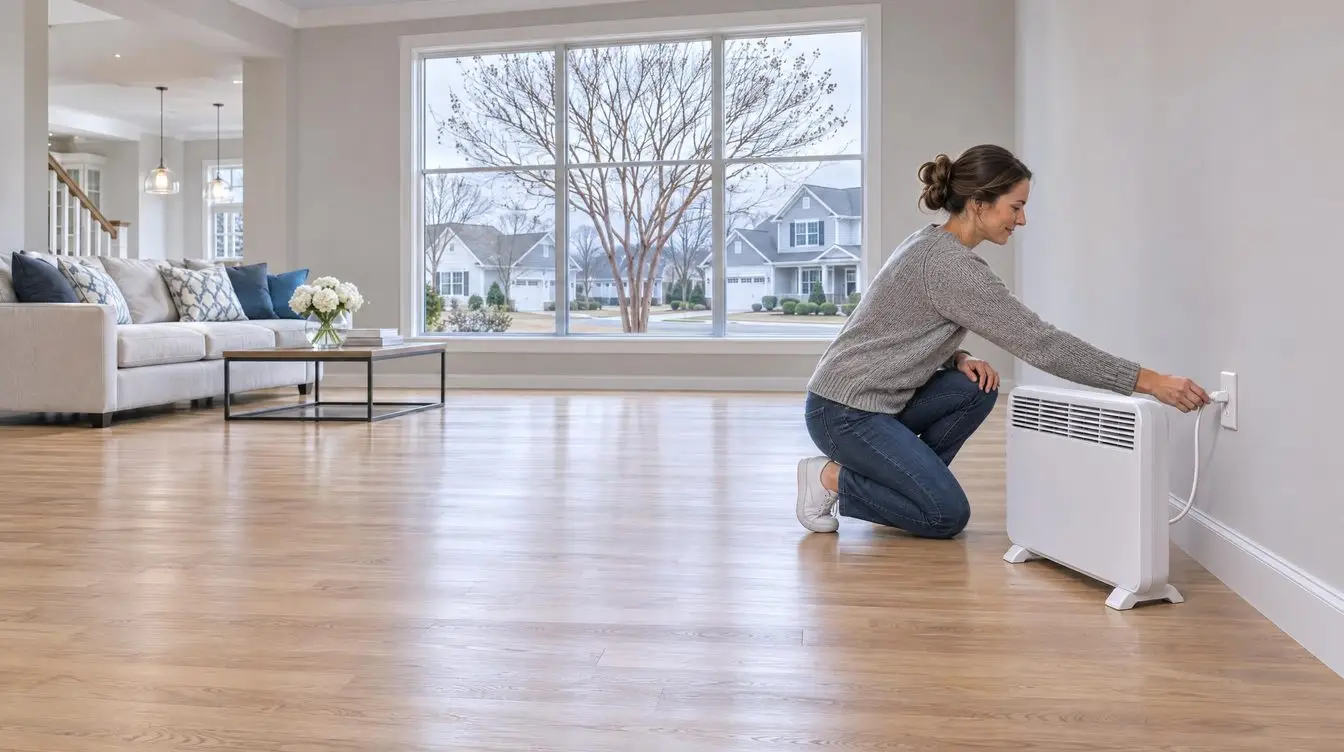
- Plug an electric space heater straight into a wall outlet, never into an extension cord or power strip.
- Keep it at least three feet from anything that can burn, on a level floor and out of walkways.
- Turn it off when you leave the room or go to sleep, and call an electrician if the plug runs hot.
The first cold morning is when the space heater comes out of the closet. Near the water in Hampton Roads, frost usually shows up around the middle of November, and inland areas see it sooner. Our winters are mild, so many of us warm one chilly room instead of the whole house. In a room with few outlets, an extension cord can look like the answer. The Consumer Product Safety Commission (CPSC) and the National Fire Protection Association (NFPA) both say it is not.
NFPA reports that December, January and February are the peak months for home heating fires, and that more than half of home heating fire deaths start when heating equipment sits too close to things that can burn, such as furniture, clothing and bedding. A few habits take most of that risk away.
Before you plug inLook the heater over first
Start with the heater itself. CPSC advises choosing one that has been tested and certified by a nationally recognized testing laboratory, and one with a tip-over switch that turns it off if it falls. NFPA also recommends an automatic shut-off. If your heater is many years old, it may lack those features.
Then check the cord and plug. Look for cracks, frays or damaged insulation, and make sure the plug fits snugly in the outlet. A plug that feels slightly warm is normal because heaters draw a lot of power. A plug that feels hot is not, so unplug the heater and have a qualified pro check it, according to CPSC.
Where it goesGive it space and its own outlet
NFPA, the U.S. Fire Administration and CPSC all give the same distance: keep a space heater at least three feet from anything that can burn, including curtains, bedding, furniture, papers and clothing. NFPA also suggests a three-foot zone around the heater that children and pets stay out of.
- Put it on a level, hard floor, not on a rug, carpet or furniture.
- Keep it out of walkways, and never block a doorway.
- Keep it out of bathrooms and damp spots, unless the heater is made for that use.
- Do not use it to dry clothes, shoes or towels.
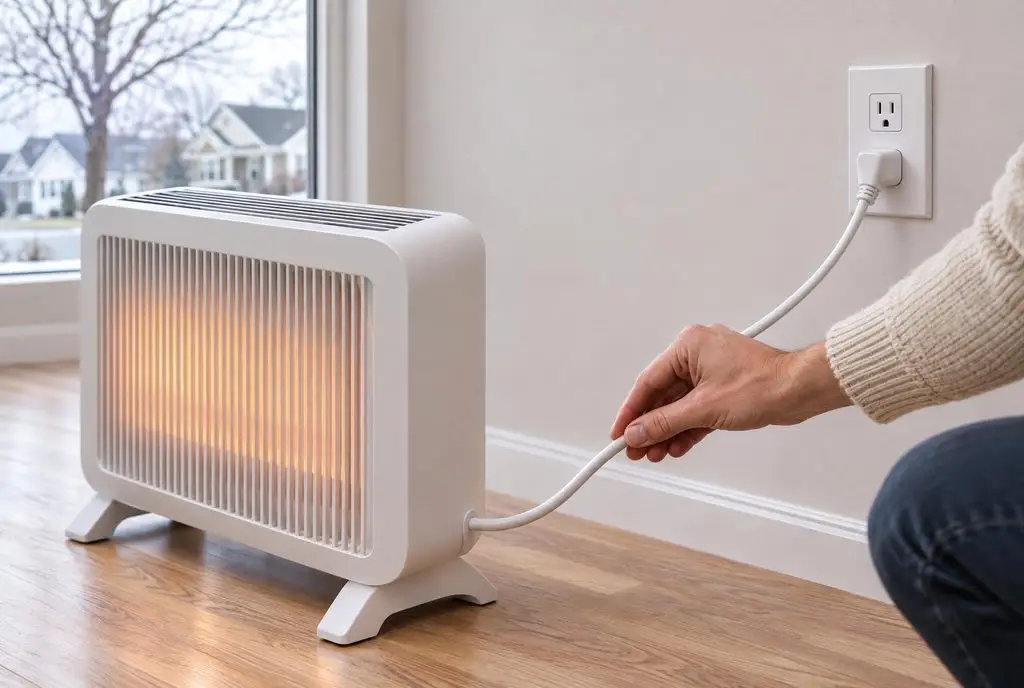
Plug it straight into a wall outlet. CPSC and NFPA both advise against extension cords and power strips for electric space heaters, because many cords cannot handle that much current and can overheat. NFPA also suggests plugging only one heat-producing appliance into an outlet at a time, so keep the coffee maker on a different outlet.
OvernightTurn it off when you leave or go to sleep
NFPA, the U.S. Fire Administration and CPSC all say the same thing: turn the heater off when you leave the room or go to bed, and never leave it running unattended. Unplug it and put it away when the cold snap ends. Test your smoke alarms while you are at it. This guide covers electric heaters. Fuel-burning heaters need extra care and fresh air, and a carbon monoxide alarm nearby.
A space heater should be a helper, not your main heat. If the whole house stays chilly, your heating system may need attention, and our guide to getting your heat pump ready is a good place to start. If you also use a fireplace, see our chimney and fireplace checklist.
Your callRather have a pro handle it?
Call a pro if the plug runs hot, a breaker or GFCI keeps tripping when the heater runs, or you want an outlet added where you need one. CPSC advises having a damaged heater repaired by a qualified service center rather than fixing it yourself. On HRHS you can search local electricians who serve your area, check qualifications and reviews, check availability, then request a bid or reach out, all in one place before you share any personal information. Browse Electrical Services pros across Hampton Roads.
Common questions
Can I plug a space heater into an extension cord?
CPSC and NFPA both say to plug electric space heaters directly into a wall outlet, not an extension cord or power strip. Many cords cannot handle the current a heater draws, and they can overheat. If the outlet is too far away, move the heater or ask an electrician about adding an outlet.
Is it safe to leave a space heater on overnight?
No. NFPA, the U.S. Fire Administration and CPSC all advise turning a space heater off when you leave the room or go to sleep. A heater can tip, overheat or ignite nearby fabric while no one is watching. If a room is too cold to sleep in, ask a pro to look at your heating.
How far should a space heater be from furniture?
Keep it at least three feet from furniture, curtains, bedding and anything else that can burn, as NFPA, the U.S. Fire Administration and CPSC advise. Measure on every side, including the back and the top. Keep children and pets out of that three-foot zone too.
Is it safe to use a space heater in a bathroom?
Not unless the heater is made for damp places. CPSC advises against using heaters in wet or moist rooms such as bathrooms, since moisture can damage parts and lead to a fire or shock hazard. Check the label and the instructions before you decide.
What should I look for in a safe space heater?
Look for a mark from a recognized testing laboratory, a tip-over switch and overheat protection or an automatic shut-off. A sturdy cord with an undamaged plug matters too. Read the maker’s instructions before you use it the first time.
Why does my space heater plug feel warm?
Some warmth at the plug is normal because heaters draw a lot of power. CPSC says that if the plug feels hot, you should unplug the heater and have a qualified pro check the heater and the outlet. A loose-fitting plug can overheat, so do not keep using it.